Yamata FY335A Troubleshooting Guide
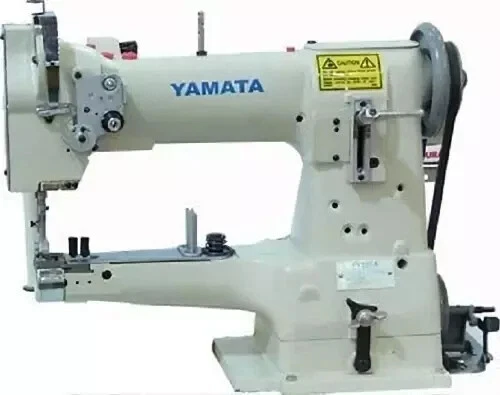
Yamata FY335A – Troubleshooting Guide
This section provides brief troubleshooting information to help identify and correct common issues that may occur during machine operation. When any of the problems listed below arise, they can usually be quickly diagnosed and corrected by following the recommended causes and solutions.
A. Needle Breakage
Possible Causes and Corrections:
Needle is loose in the clamp→ Tighten the needle clamp screw securely.
Incorrect needle class or type is being used→ Compare and replace with the correct needle specification.
Presser foot is loose or misaligned→ Align properly and tighten.
Needle is too light for the fabric→ Select a heavier needle suitable for the material.
Operator is pulling the fabric→ Do not assist the machine; allow it to feed the material naturally.
B. Needle Thread Breakage
Possible Causes and Corrections:
Thread is too heavy for the needle→ Use a thicker needle.
Right-twist thread is being used→ Use left-twist thread only.
Thread is damp or defective→ Replace with dry, smooth thread.
Machine is threaded incorrectly→ Rethread following the machine’s threading diagram.
Needle is installed incorrectly→ Install with the short groove facing the loop taker.
Upper thread tension is too tight→ Adjust tension to achieve balanced stitches.
Thread take-up spring is improperly adjusted→ Adjust according to specifications.
Sharp edges on loop taker, bobbin case, or tension controller→ Smooth with fine emery cloth (320 grit) or oil stone, then polish.
Needle is rubbing against the presser foot→ Realign and tighten the presser foot.
Needle is bent, blunt, or damaged→ Replace with a new needle.
Needle hole in feed dog is burred or sharp→ Smooth the affected area.
C. Bobbin Thread Breakage
Possible Causes and Corrections:
Thread is defective or damp→ Use dry thread of the correct size.
Bobbin case tension is too tight→ Adjust for balanced stitching.
Bobbin case is threaded incorrectly→ Rethread correctly.
Bobbin is overfilled→ Remove excess thread and adjust bobbin winder.
Thread is unevenly wound on bobbin→ Unwind and rewind evenly.
Bobbin case or loop taker is dirty or sticky→ Clean with kerosene or naphtha; lightly oil the loop taker.
Sharp edges on loop taker, bobbin case, bobbin, or needle→ Smooth as needed.
Bobbin is bent or distorted→ Discard and replace with a new bobbin.
D. Skipping Stitches
If the needle thread fails to catch the bobbin thread, stitches will be skipped or sewing may stop altogether.Correction: Adjust the timing between the needle and needle bar.
E. Seam Puckering (Drawing of Seam)
If seams pucker or draw together:→ Adjust upper and bobbin thread tensions for proper balance.
F. Uneven Stitches or Stitch Pile-Up
Possible Causes and Corrections:
Stitch length is too short→ Increase stitch length using the stitch regulator.
Insufficient presser foot pressure→ Increase pressure as required.
Feed dog height is incorrect→ Ensure feed dog teeth rise to their full depth above the needle plate.
G. Feed Dog Striking the Throat Plate
Possible Causes and Corrections:
Feed dog rises too high→ Adjust so it rises no more than the depth of the feed dog teeth.
Feed dog travel is excessive→ Check for contact with front or rear of throat plate slots.
Stitch length is set too long→ Slightly reduce stitch length.
Debris buildup between feed dog and throat plate→ Remove throat plate, clean all debris, wipe underside, and reinstall securely.